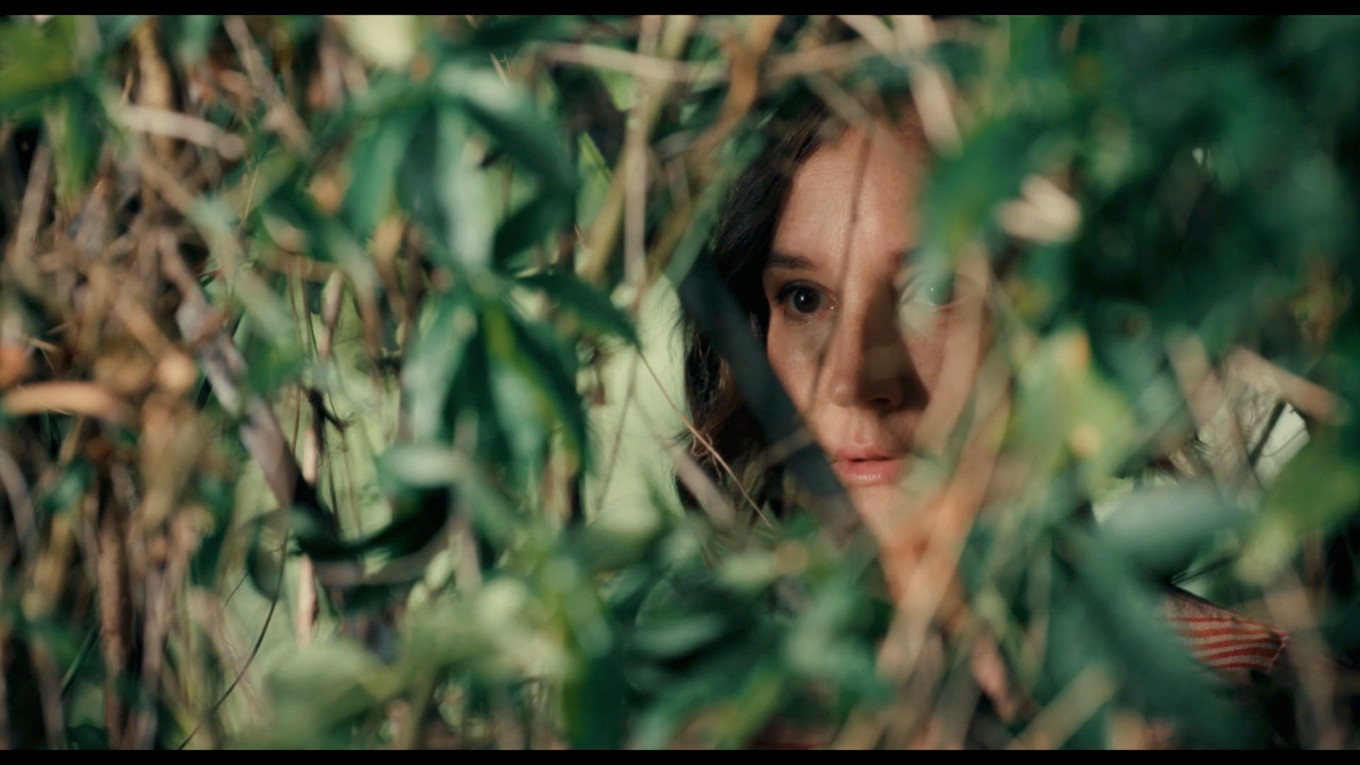
La Vénus électrique (The Electric Kiss) © Guy Ferrandis
This year, La Vénus électrique (The Electric Kiss) by Pierre Salvadori will open the 79th edition of the Festival de Cannes. The author of En Liberté ! (The Trouble with You), Hors de prix (Priceless) as well as Les Apprentis (The Apprentices), returns with a new irresistible comedy, reuniting Anaïs Demoustier, Pio Marmaï, Gilles Lellouche, and Vimala Pons. As usual, swindles and misunderstandings abound while a fake medium, a grieving painter, an opportunistic gallery owner and … a ghost, roam the streets of 1928 Paris! Interview with a master puppeteer turned filmmaker.
Lying is a recurring theme in your films. Why is that?
Let’s say that first and foremost, it has always been a powerful comedy tool, because it creates an immediate bond with the viewer. It gives the story energy. There’s a principle of dramatic irony, where the audience knows something that the characters don’t know. I also realized that there was something really interesting about liars when they are desperate and would like to reinvent themselves or escape their own existence. When a character is ready to do anything to get out of something, it makes them endearing.
Filming a misunderstanding also requires the right rhythm and choreography. Do you stage the lie like physical comedy?
Yes, the lie creates chaos, and comedy is organized chaos. From then on, the rhythm is crucial. When you have a hilarious story that doesn’t hold up in the retelling, it means it lacked the proper rhythm. We’re always chasing the perfect rhythm. For me, a comedy works when it becomes pure motion and within this motion, there are characters in meaningful situations revealing the human condition.
The film features a fake medium in 1920s Paris, who is fascinated by spiritualism. Did this era seem more conducive to make believe than today?
I needed a lead character [Pio Marmaï, editor’s note] who could believe in the possibility of talking to the woman he lost, without seeming too gullible. In this time period it seems that the afterlife provided an alternative to religion to answer questions such as where do souls go? So, if I’m using that era it’s because I want him to appear as someone who’s openminded. At that time there’s a real craving for belief, which doesn’t seem far-fetched at all.
It’s your first period piece, were you drawn to the idea of costumes and dressing up?
If you put it that way, yes, I’m very interested because it reinforces the idea of fiction. And I, for one, am in love with fiction. I’m not interested in realistic cinema. Fiction permits disconnecting, it allows irony. What I love, is truth seen through outlandish zany tales that have more or less been completely made up.
For you, is the Festival de Cannes more a place of truth or rather… the loveliest of illusions?
Truth, above all! What is so amazing about Cannes, is that it is one of the last places where arthouse cinema is still fully celebrated as freedom of expression. When you work with streaming platforms, you must take their opinion into consideration. It’s right there in the contract. You don’t have final cut. I have never been able to show as much love for my craft as I did with La Vénus électrique (The Electric Kiss). My team and I dreamed about opening! Of starting the party, being in this joyful place and celebrating the freedom of cinema.
Finally, who’s closest to your heart, the swindlers or the swindled?
I have never filmed anyone I didn’t love. Lying to someone you love can be painful. Suzanne [Anaïs Demoustier, editor’s note] is in debt. She needs something else and she will have to betray the man she loves. Likewise, when Armand [Gilles Lellouche, editor’s note] manipulates Antoine to get him to paint, it’s horrible. But then at some point, I think he realizes this. I have a soft spot for characters that lose themselves and then revert to their human frailty. I’m not filming saints, which is just as well because otherwise I would have given myself very boring films.
What is your favorite swindler movie?
For me one of the most beautiful movies involving manipulation and lies is George Cukor’s The Philadelphia Story (1940), a comedy about second chances with Katharine Hepburn, Cary Grant, and James Stewart.