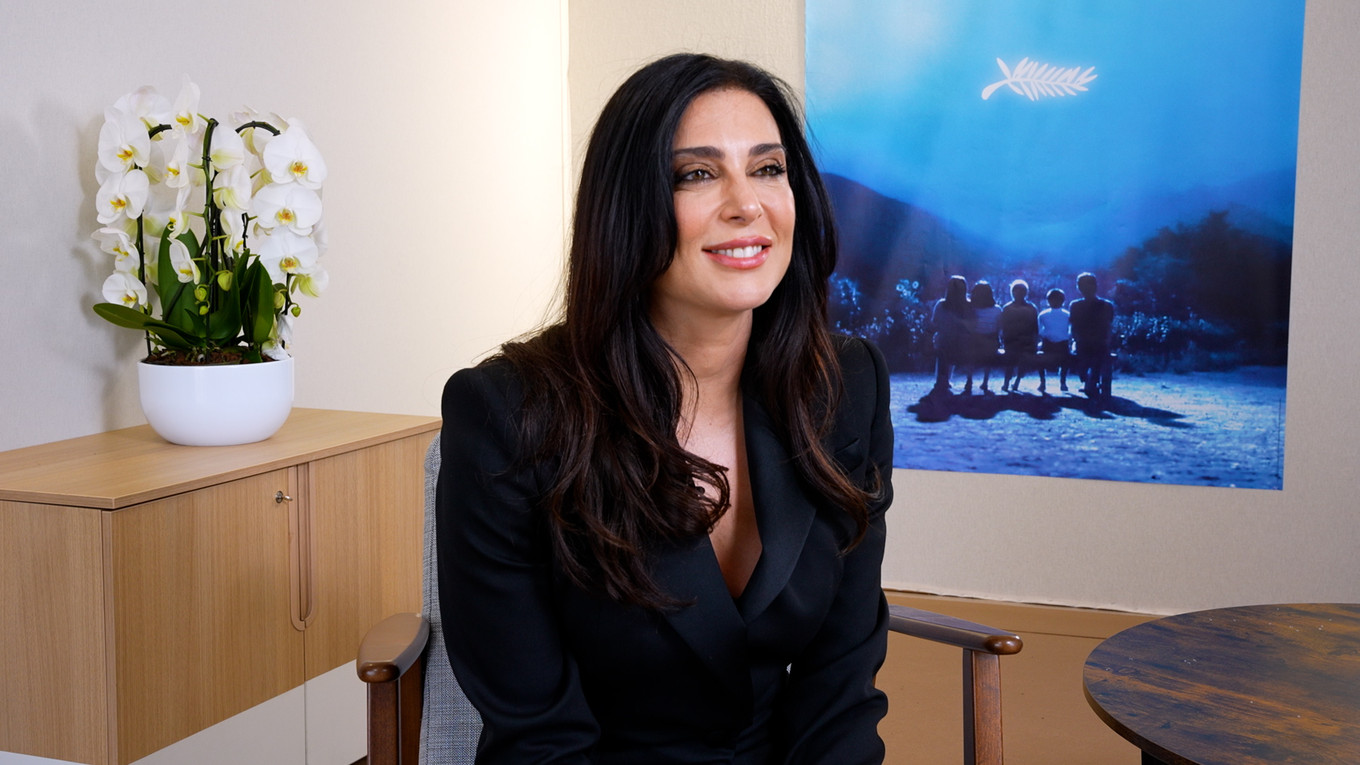


Meeting Nadine Labaki, member of the Jury for Feature Films
Nadine Labaki has a gift for creating films that touch hearts. Her landmark film Capharnaüm (Capernaum) won the Jury Prize in 2018, a special moment of recognition for the Lebanese director whose professional journey has been closely linked to Cannes. She developed her first feature film, Caramel, at the festival’s Residence in 2004, before presenting Et maintenant on va où ? (Where Do We Go Now?) during Un Certain Regard, a selection for which she was president of the Jury in 2019..
You worked on your film Caramel at the Festival Residence. What did you learn from your time there?
The programme brought together several directors, cultures, countries and ambitions, all in one apartment where we could exchange ideas and do nothing but concentrate on what we were writing. I have incredible memories from that time. It gave me a lot of confidence since we were selected for the Residence based on the projects we were developing. When I was there, we had meetings with film industry professionals who would give us their opinions and tell us about their experiences. It’s a place where you can finally see your dream becoming reality.
Would you consider your cinematographic approach to be humanist?
Even without meaning to, the basis of my work is always human nature, delving deep into human behaviour. So it becomes humanist cinema. I try to work with my actors and develop my stories in a way that makes me a “vehicle” for carrying their struggles.
How did you feel about the unanimous public and critical reception of Capharnaüm (Capernaum)?
It was amazing. It changed my life, both during filming and during the adventure that followed. Deep down, I knew there was something really powerful about the film and that with it, I would be able to connect with a large audience, but I never expected a reception like that. You never know what kind of impact a film might have. Only after showing it can you understand what it’s done – for me as well. Cannes was the reward for the work the entire team put into the film.
Do you have any news about Zain al-Rafeea, who moved the Cannes audience with his performance in Capharnaüm (Capernaum)?
Zain now lives in Norway. He’s a young man, 18 years old, and he’s doing very well. He has appeared in lots of films recently, including one we shot together in Beirut where I played his mother.
Acting has been a key part of your career since Capharnaüm (Capernaum). What do you enjoy about it compared to directing?
It brings me a lot of joy because I’m freed of responsibility for the film. Having said that, I’m always on set. But I enjoy being able to live other lives, other adventures. I can throw myself fully into a project without having to think about the end result like I do when I’m directing.
In terms of what Lebanon is currently going through, what are the working conditions for those within the film industry?
The situation in Lebanon is difficult, but we aren’t giving up. I think what will save us is cultural resistance. The film industry is still going strong, thankfully. There are still films being made, and so many beautiful adventures and stories in the works. These human adventures are our means of resistance, and I mean that wholeheartedly.