© Jean-Louis Hupe / FDC
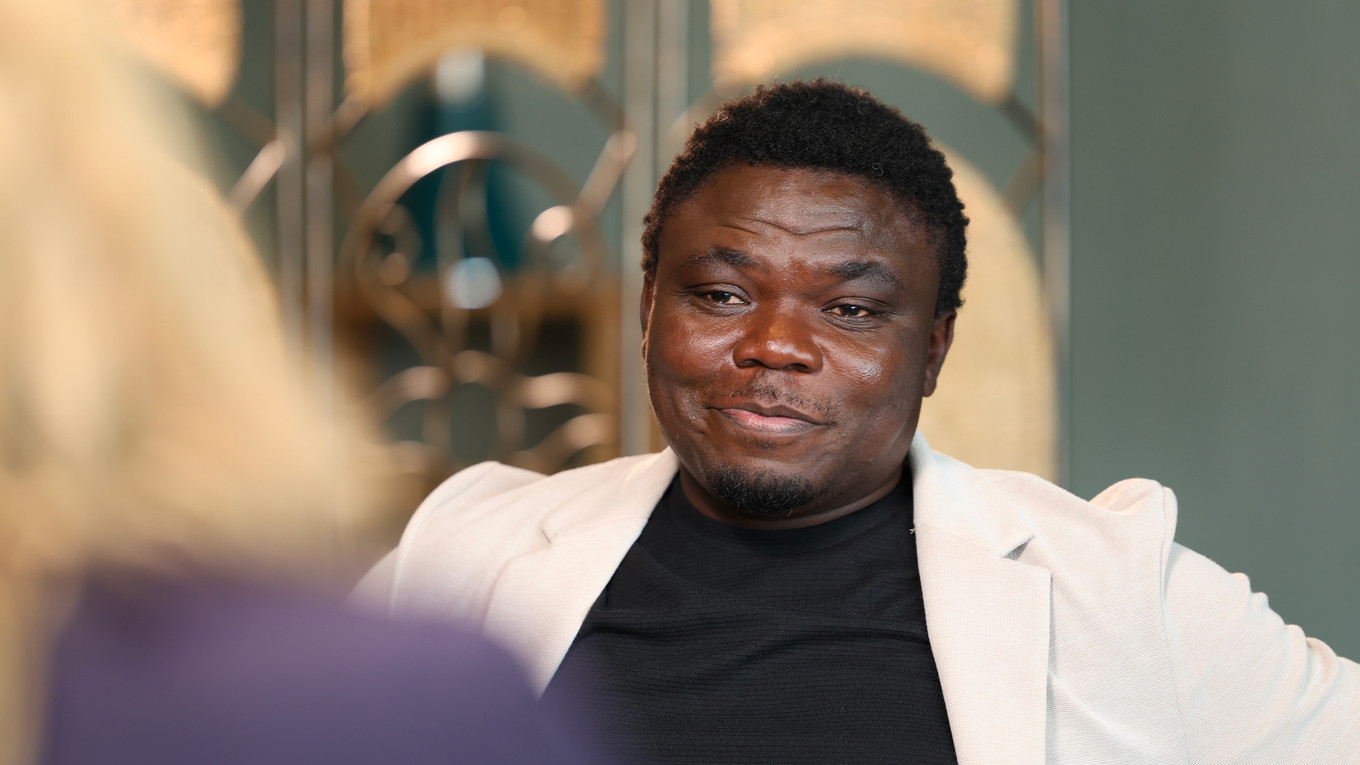
With two short films, documentaries, a series of dramas in post-production: Congolese filmmaker Dieudo Hamadi, a member of the Feature Films Jury, talks about his career in a country where cinema had been wiped out by war.
You represent best your country’s cinema. Was there a tradition of filmmaking in the Democratic Republic of Congo prior to the war?
Before the 1990s, there was a generation of highly sought-after filmmakers. There was a sudden end to that with the war, with all the filmmakers, most of whom had been trained abroad, forced into exile. So there’s a kind of void that was created by the conflict, between that generation and mine. When I started out in cinema, I had virtually no points of reference. Churches had replaced movie theatres. Today, watching a Congolese film in the Congo is nothing short of a miracle. When I got behind the camera, I rapidly learned to do everything, often for the first time.
Have you always shot your films in the Congo?
Yes, all my films have been made in the Congo. I made a name for myself with documentary films, which in my case were very political. It was a way of talking about evil, about wounds, about trauma; and since what I depicted did not always paint the leaders in a flattering light, it did not interest them. Besides, there was no infrastructure for screening these films. I was recognized abroad, but was virtually unknown in my own country. That was until 2020, the year of COVID, when my film En route pour le milliard (Downstream to Kinshasa) was submitted to Cannes and selected. Being labelled as “Cannes 2020” was what it took to arouse interest in our work.
What is En route pour le milliard (Downstream to Kinshasa) about?
This is the story of people who escaped from a now forgotten conflict in Congo, known as the Six-Day War. In 2000, the country was divided into two warring factions. In Kisangani, where I am from, there were two foreign armies supporting two rebel groups. They fought in the city for six days. I was 16 at the time, and those events have stayed with me ever since.
Some years after, I returned to Kisangani wanting to tell this story. I discovered that some of the local residents had lost everything. These war survivors formed an association and have been trying to get compensation ever since. I arrived just as they were preparing to leave their town and go to Kinshasa to meet with the country’s highest authorities, hoping to finally be heard. A total of eighteen years had passed between the war and this journey I embarked on with them. They had very limited resources, so the only means of transportation available was a boat, which would take us nearly 2,000 kilometers downriver.
I documented this journey with my camera. It was also a revelation for me, sharing their daily lives, how they lived, and their determination.
How did your passion for cinema start?
In a country where film culture was brutally wiped out by war, I grew up watching American blockbusters starring actors like Stallone, and Schwarzenegger, but in 2007, I was lucky enough to take part in a competition organized in my town by choreographer Faustin Linyekula. That’s when I discovered other films and other approaches, guided by people who were able to teach me how to watch. That’s where I first heard about filmmakers like Raymond Depardon, Rithy Panh, Jim Jarmusch, and others.
A long time before that, my father had bought me a computer, which was a luxury. I used it to edit clips and commercials for friends. I became fascinated by it, and when I joined this workshop, I wanted to pursue it further.
There was a second, more in-depth workshop held a few months later in Kinshasa, again thanks to Faustin. It was led by another person from the Congolese diaspora, Djo Munga (Viva Riva!, 2010). The teachers were from INSAS in Belgium and La Fémis. That’s when it clicked into place. I was meant to return home to continue my medical studies, but I called my parents to tell them I was staying in Kinshasa to get into filmmaking. That was in 2007.
I didn’t know where to start. I was acutely aware of the technical constraints in my country, but watching 10e Chambre (10th District Court) (2004) by Raymond Depardon, I realized that a simple device — a camera in a courtroom — could create a powerful narrative. All it took was a place, a gaze, to stir up all those emotions. And just like that, everything became possible.