© Jean-Louis Hupe / FDC
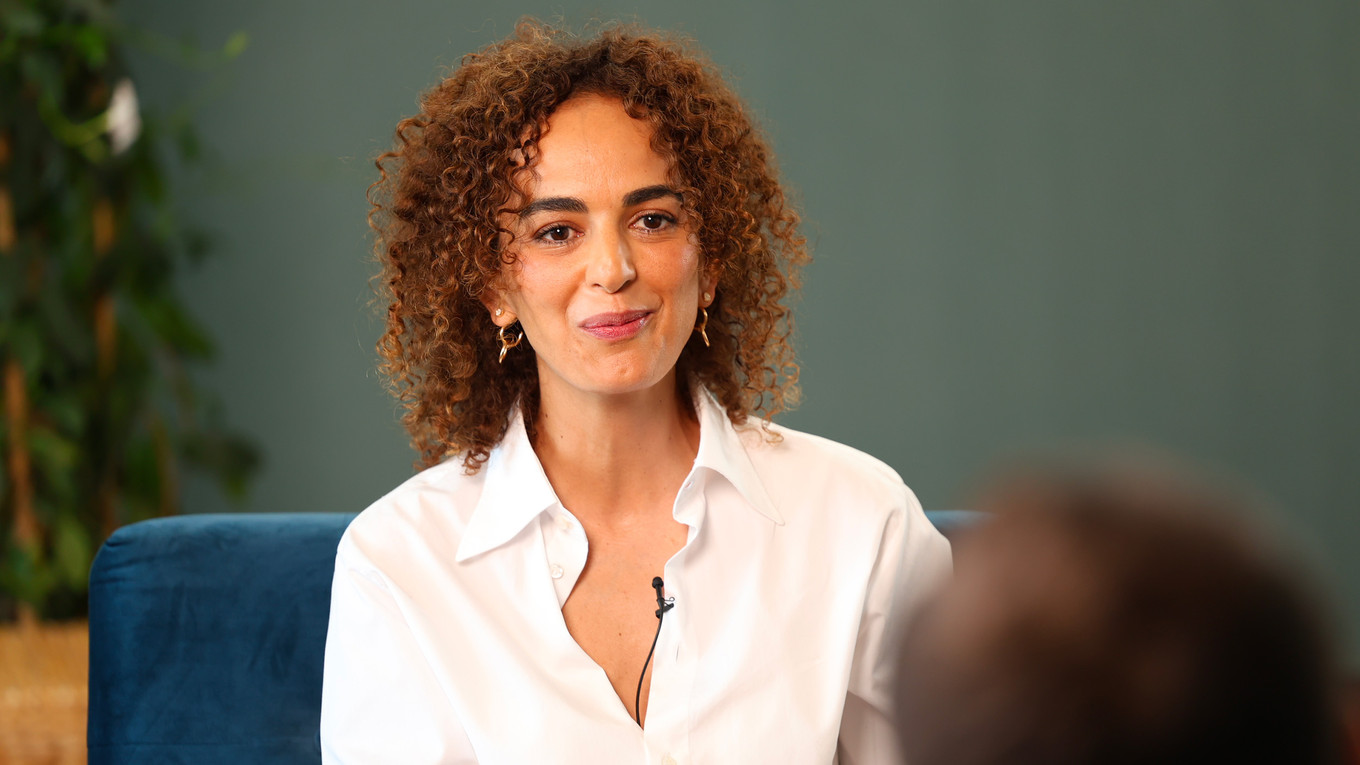
Leïla Slimani, the French-Moroccan author, who received the Prix Goncourt in 2016 for Chanson douce (Lullaby) joins the Feature Films Jury with the curiosity of a great film lover. Inspired both by words and images, she’s currently trying her hand at screenwriting for the adaptation of her trilogy Le Pays des autres (The Country of Others).
When were you first blown away by a cinematic experience?
I must have been four or five, and it was probably a musical, Singing in the Rain, or maybe a dance film with Marilyn Monroe. My parents introduced me to a lot of films from the Golden Age. These are films that I show my own children or that I watch again by myself. I’m still fond of them. These films have a mysterious quality, we watch them again when we’re older and discover something completely different from what we saw as a child.
What is your relationship to movie theatres?
I go to the movie theatre almost daily, in the morning. When I still lived in Paris, there was a neighborhood movie theatre that I go back to when I’m there, Les Cinq Caumartin, a place where film lovers meet. Movie theatres create a real connection with film, breathing that solitude, while also offering the possibility of mingling with other people. And it’s so amazing to experience films together with like-minded strangers.
Which Moroccan film would you recommend?
Much Loved, from Nabil Ayouch, since it caused a scandal and was historically very significant, both politically and for its cinematography. It propelled me to write a book called Sexe et Mensonges (Sex and Lies), and I think it’s a very essential film addressing the importance of women’s bodies and their sexuality, while also revealing a lot about the tensions that continue to exist in Moroccan society.
What do you think is the relationship between writing literature and writing for the big screen?
From its inception, cinema has sought its inspiration in literature. We are storytellers who create universes. We have characters, a story, and a narrative that must flow. The big difference lies in writing from within, a silent writing that culminates in a novel. While cinema is an industry with significant means. In a novel, you can create a battle with 5,000 extras with a single pen and a piece of paper.
What is your experience as a screenwriter?
I’m currently co-writing with a friend on one of his films. I am adapting my trilogy, Le Pays des autres (The Country of Others), I am leading my own writing office. I’m really enjoying it, even if I’m still terrible at writing dialogue. There’s very little of it in my novels and this is an opportunity to learn to write some.
Can you recall an adaptation of a novel that particularly moved you?
Perhaps a great classic such as, Il Gattopardo (The Leopard)… or perhaps Out of Africa. These are truly adaptations that became masterpieces in their own right. Many people are not even aware that these are based on great books. The directors were able to create powerful films, which have their own identity. There’s another one, The Hours, which is a magnificent adaptation – a double adaptation, since it’s a book that pays tribute to another book, Mrs. Dalloway.
Is there a book that you’d like to see on the big screen?
Perhaps The Cairo Trilogy, by Naguib Mahfouz, who won the only Arab Nobel Prize for Literature. This trilogy tells the story of a family in Cairo from the 1900s to the 1930s. It’s absolutely sublime, it takes place in an Egypt that has unfortunately been lost a little, with colorful female characters and also some incredible men. I think Youssef Chahine, the Egyptian director, wanted to adapt it, but it never came to fruition.
What is your hope for a cinema of the future?
A cinema that continues to make us human, a world cinema, where all voices are heard. But also a cinema that takes risks. There’s a famous line by André Malraux, which ends one of his books that says, “After all, cinema is an industry.” I wouldn’t want this industry to supplant history, I would hope to return to a more fragile cinema, on a smaller scale that would perhaps be more moving.