ROMA ELASTICA
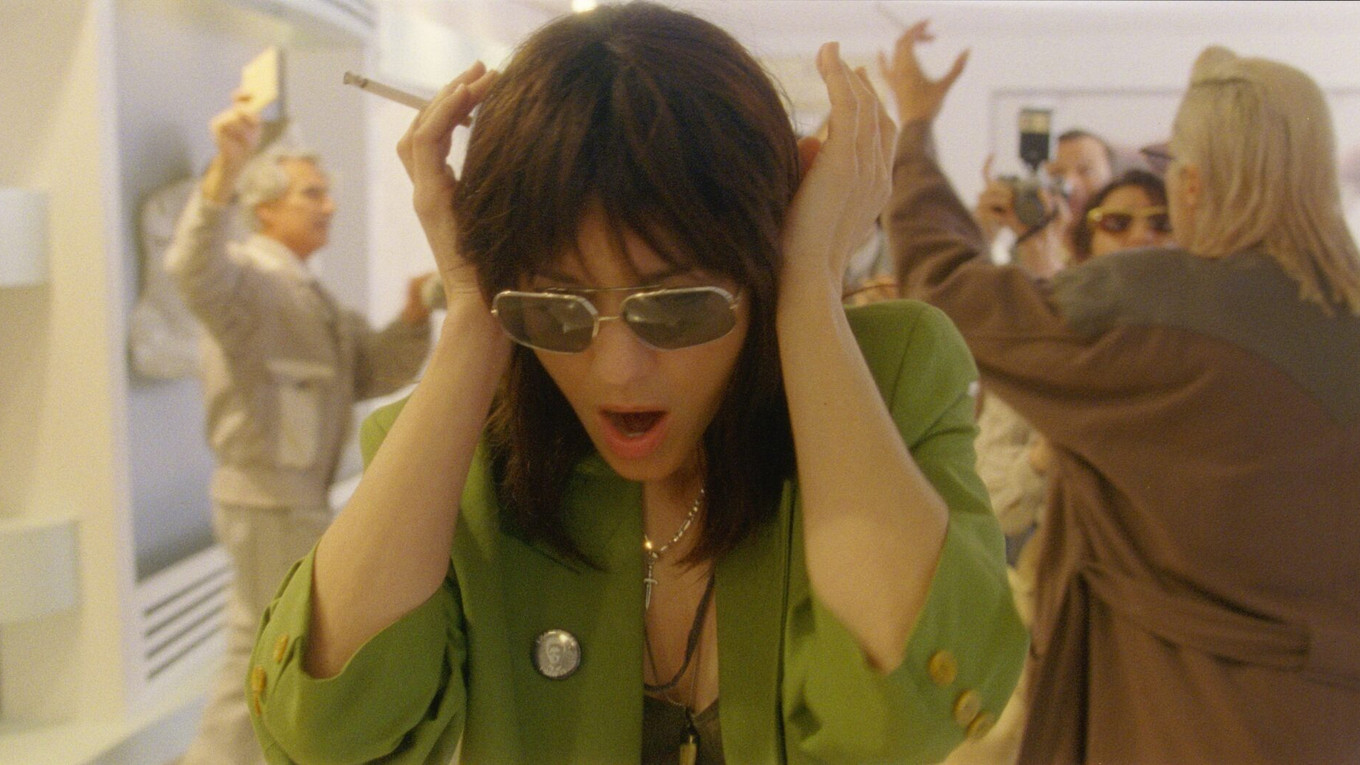
Roma Elastica plunged the Cannes night into a Fellini-esque melancholy for the last of the Midnight Screenings of this 79th edition of the Festival. In an imaginary, twilit Rome in the 1980s, Bertrand Mandico features an actress on the decline (Marion Cotillard) and her rough-edged makeup artist (Noémie Merlant) for what could very well be their last film.
What made you want to put an actress front and center and make her the main character more than in your previous films?
I wanted to break the cycle that I had with my three feature films. These adventure films were parables. In this one, I wanted to present a palpable, recognizable reality in the 1980s; a reality that is mine, that exists in cinema and in the world of actresses.
“I have a fascination with actresses, who are the martyrs of the film industry.”
Everyone knows that they are martyrs at a young age, as victims of predators in the film industry, then when they’re older, because the industry tends to reject them. It’s something that moves me. I wanted to work on this with the illness that symbolizes the film industry.
A condemned actress, a film industry in decline… how have you linked these two losses?
It’s a film about the twilight of cinema, which was flamboyant and still is because there was a rebirth, but the 1980s was a difficult phase. Everything died with Berlusconi TV and his populism. Likewise, I wanted to work with this actress in the twilight of her life to draw a parallel between her destiny and that film industry.
Roma Elastica seems brighter than your previous films…
I wanted to make a sunny film. It’s funny because just now I was photographed with neon colors and the photographer told me, “It’s just like in your films.” I answered, “No, that’s all done now.” It’s as if I detached myself from certain specifications. I proceeded by subtracting, and making note of what I didn’t want anymore.
For fear of repeating yourself?
Yes, it’s easier to subtract than to add. And I had another constraint, and not the least of which worried me a lot: the time factor. It was a film that I shot in fifteen days. The casting and crew had to play ball. I made the decision to work with sequence shots, and there are many, but I didn’t want them to be there just for show. A good sequence shot is one that you don’t realize happened. Now, I’m a bit more relaxed, but I had very difficult periods during filming. I feared it was too big a risk for me.
There are Fellini accents in Roma Elastica and references to the masters of Italian cinema. To what extent were you inspired by them?
I would say that it’s a haunted film. I don’t like cinematic citation. The quote, end-quote is a bit heavy. On the other hand, I let myself be possessed by the spirit of some filmmakers or some films that left an impression on me and remain etched on my mind. I am a movie-loving filmmaker and I embrace it. I developed through preexisting films, and I continue to learn and devour films. I summoned Two Weeks in Another Town from Minnelli, Visconti and Fellini. They were all there, and I wasn’t afraid of these big names. It was like petting big cats.