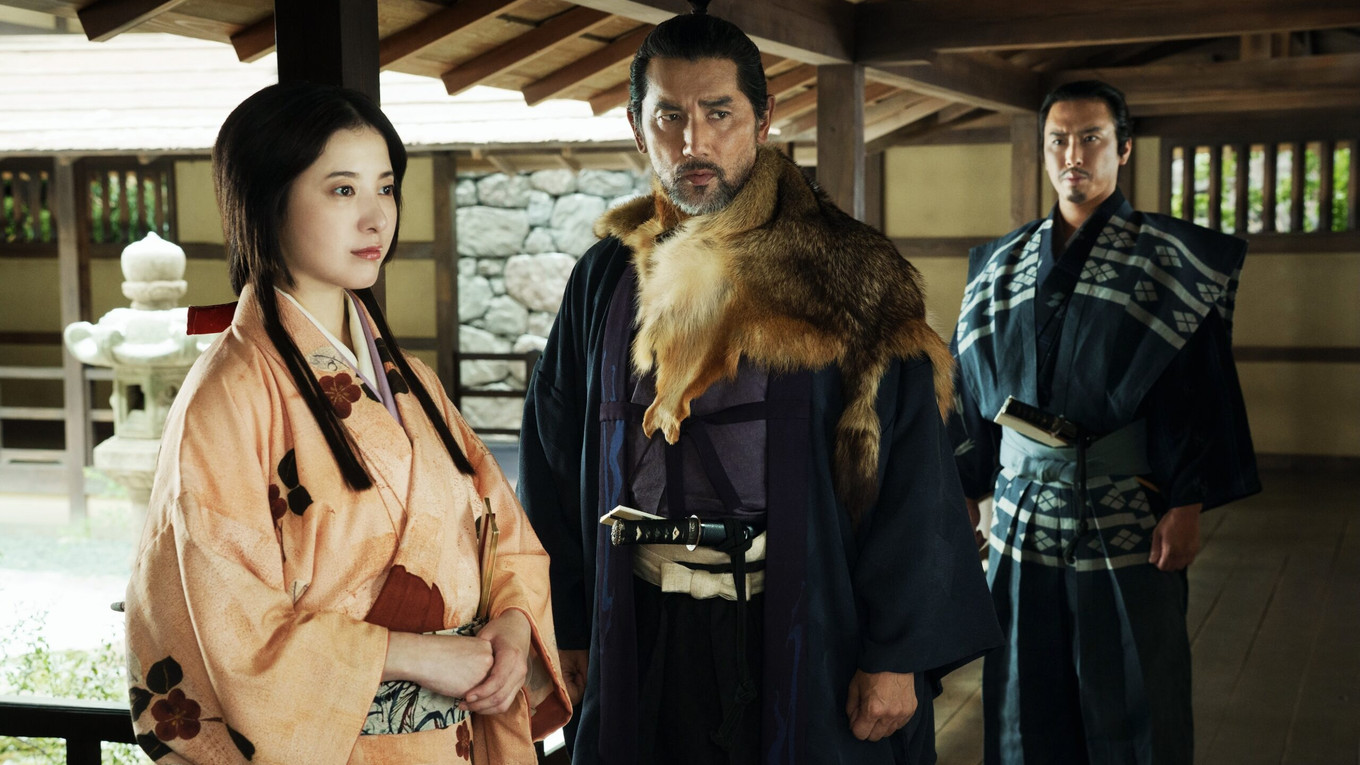
THE SAMURAI AND THE PRISONER ©2026 KOKUROJO FILM PARTNERS
Kiyoshi Kurosawa is definitely indefatigable. After releasing three films in 2024, (Chaimu (Chime), Hebi no Michi (Serpent’s Path) and Kuraudo (Cloud)), the 70-year-old Japanese filmmaker has gifted us with another feature film shown in Cannes Première, Kokurojo (The Samurai and the Prisoner), which explores chanbara or “samurai cinema”, a genre hitherto unseen in his filmography.
Kurosawa takes us on a journey to feudal Japan, to the heart of Lord Murashige’s castle. As he tries to protect the castle which is besieged by enemies, he is confronted with a series of mysterious crimes that threaten the fragile order from within. As paranoia takes over, with possible traitors in his midst, Lord Murashige’s investigations start to falter. He finds himself forced to ask Kanbei, an enemy he imprisoned, for help. The relationship between the two men is transformed, between control and distrust, and everything starts to slip out of Murashige’s control.
Kiyoshi Kurosawa has adapted Honobu Yonezawa’s historical novel “The Samurai and the Prisoner”. The filmmaker delves into chanbara for the first time, the Japanese equivalent of Chinese wu xia pian, films exploring the adventures of martial artists in ancient China. It is by no means surprising that the filmmaker is delving into a new genre, as this is something he has been doing since his first films in the 1980s.
In 2024 alone, Kurosawa released three films in France demonstrating his ability to seamlessly move through different genres: Chaimu (Chime), inspired by Japanese beliefs about sound to create a very modern horror, Kuraudo (Cloud), a cyber thriller about the tricks and scams of an online reseller, and Hebi no Michi (Serpent’s Path), which follows Damien Bonnard and Mathieu Amalric on an investigation full of twists and turns.
Kiyoshi Kurosawa has twice been crowned at the Festival de Cannes: in 2008 with Tokyo Sonata, winner of the Un Certain Regard Prize, and then in 2015 with Kishibe no tabi (Journey to the Shore), winner of the Award for Best Director.