LES MATINS MERVEILLEUX © EDRICHARD
IN THEATERS JULY 29 – Wonderful Mornings, the comedy directed by Avril Besson and starring India Hair, Raya Martigny and Eric Cantona, is now playing in theaters across France!
[A look back at its Cannes premiere]
Avril Besson had already directed India Hair and Raya Martigny in Queen Size, her short film nominated for a César in 2025, which served as a kind of dress rehearsal for what was to become Les Matins merveilleux (Marvelous Mornings) , her first feature film. We met all three of them just a few hours before the film was screened as part of the Special Screening series.
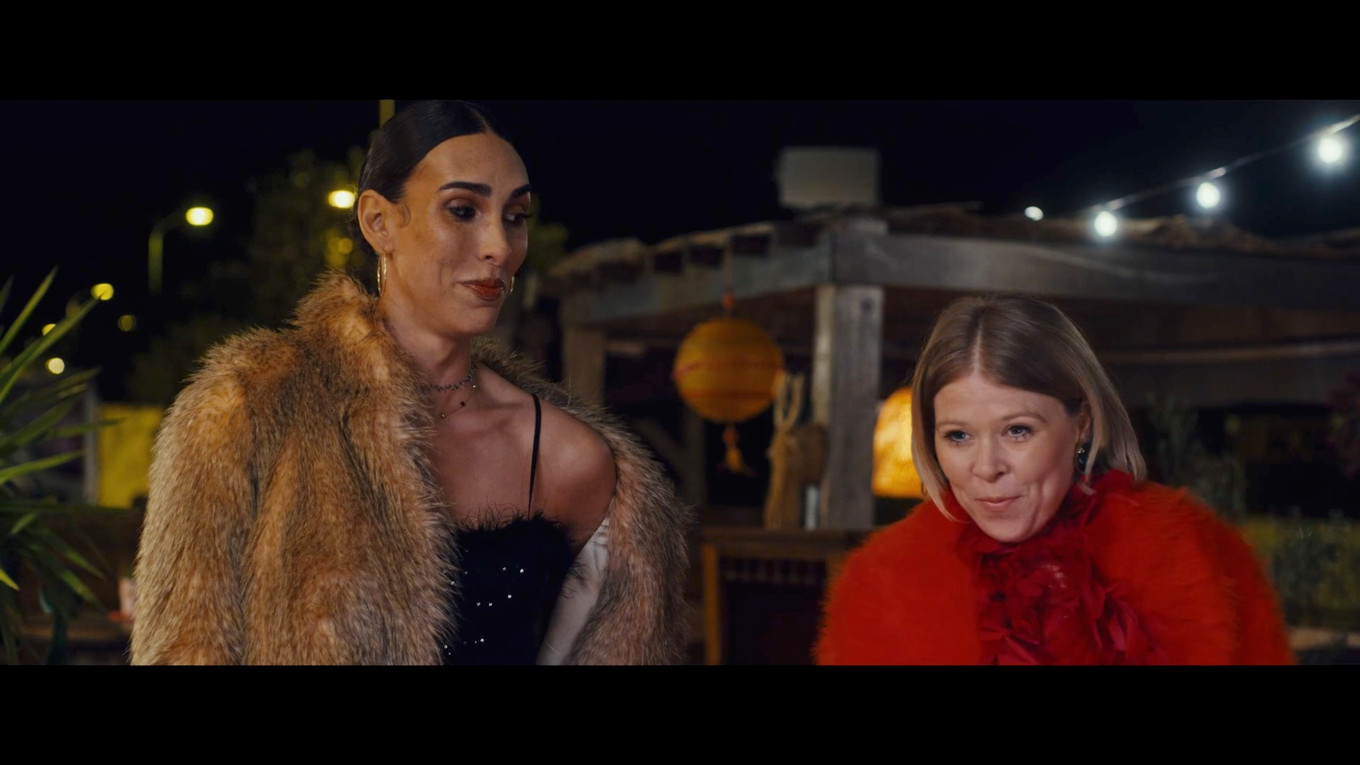
Avril Besson’s first feature film,Les Matins merveilleux (Marvelous Mornings), takes us on a road trip with Charlie (India Hair) in a Twingo. The day after her grandmother dies, she travels to the south of France to deliver part of the inheritance — a collection of disco vinyl — to a close friend of her grandmother. In a village on the Mediterranean coast, she comes face-to-face with her late mother’s past and, through her friendship with the free-spirited Marina (Raya Martigny), she sets about reinventing herself.
What motivated you to write this film?
Avril Besson: Originally, I wrote a lead role for India that really played up her burlesque side, but then I had the idea to film a transgender woman — to contrast a very naive sense of femininity with a woman who is very comfortable in her own skin. Marina teaches Charlie that she has the right to write her own story, and Charlie will teach Marina that she has the right not to write her own story too much. They will inspire the desire in each other for simplicity and kindness, warmth and humor.
What struck you about these characters?
Raya Martigny: What appealed to me about Marina is that she feels content to be where she is, despite her deep sense of loneliness. Trans people can also be happy where they are, in their village, surrounded by people. There’s a very tender thread running through the film. Our characters’ lives are complex, and sometimes it’s better to laugh about it than cry.
India Hair: What you just said is really what defines my character, Charlie. I think she has this thing where she never allows herself to get overwhelmed, even though she’s grieving. She always chooses to step away from her emotions in order to be there for the people around her, and I think that’s really beautiful.
Avril Besson: There’s something very English about you, India. You are always able to juggle conflicting emotions — to be very sad but still wearing a big smile, and that really works with the theme of grief. It’s like when you have a fit of the giggles at a funeral. I love that kind of atmosphere, and I think it comes through in how you act. When we did Queen Size, you asked me all the time: “Is it too much?” whereas I actually wanted that burlesque aspect.
India Hair: I’m pleased to hear you say that, because I always feel like I’m a bit off. But getting back to my character, what I find really awesome about Charlie is that she goes out to meet people with an open heart and mind. In the end, she ends up finding herself.
How did you go about treating the issue of transgender identity in this film?
Avril Besson: I put myself firmly in the position of an ally. When I was studying cinema, I had a very close friend who was trans, and I experienced firsthand the abuse he endured while we were learning how to make cinema. I think I wanted to avenge that in my first film. It was hard for him to accept himself as an artist when it was already so difficult to accept himself as a human being.
Raya Martigny: What hurts is how society projects itself onto our lives. In the film, it was enjoyable to play a character who is able to help others because she herself has managed to assert herself and find her place in the world. Marina is connected to her identity, but she’s also connected to so many other things — to nature, to her village, to the people she loves. It’s powerful, beautiful, and true, and I think many people will feel inspired by this character. We have many sides to us, and there’s nothing more precious than that.