MOULIN © 2026 Pitchipoï productions - Studio TF1
In 2015, László Nemes made Festival history by winning the Grand Prix with his first feature film, Saul fia (Son of Saul). The Hungarian director delves back into World War II with Moulin, which retraces the last days of this great Resistance hero. An interview.
What drew you to make this film?
My ambition was not to make a biopic, but to immerse the viewer into the life of a man whose last moments are unknown, while being one of the iconic figures representing what is good in Western civilization.
Why was it important to talk about Jean Moulin on screen in 2026?
I feel that we currently live in a very binary society where good and evil are dissociated from each other. Yet, good and evil coexist in human beings and in society. It’s important for me to have human beings take a hard look in the mirror to realize not only what they are capable of doing, but also to shine a light on the possibility of transcending this constant pull toward cruelty.
You made the choice to shoot this figure from close-up…
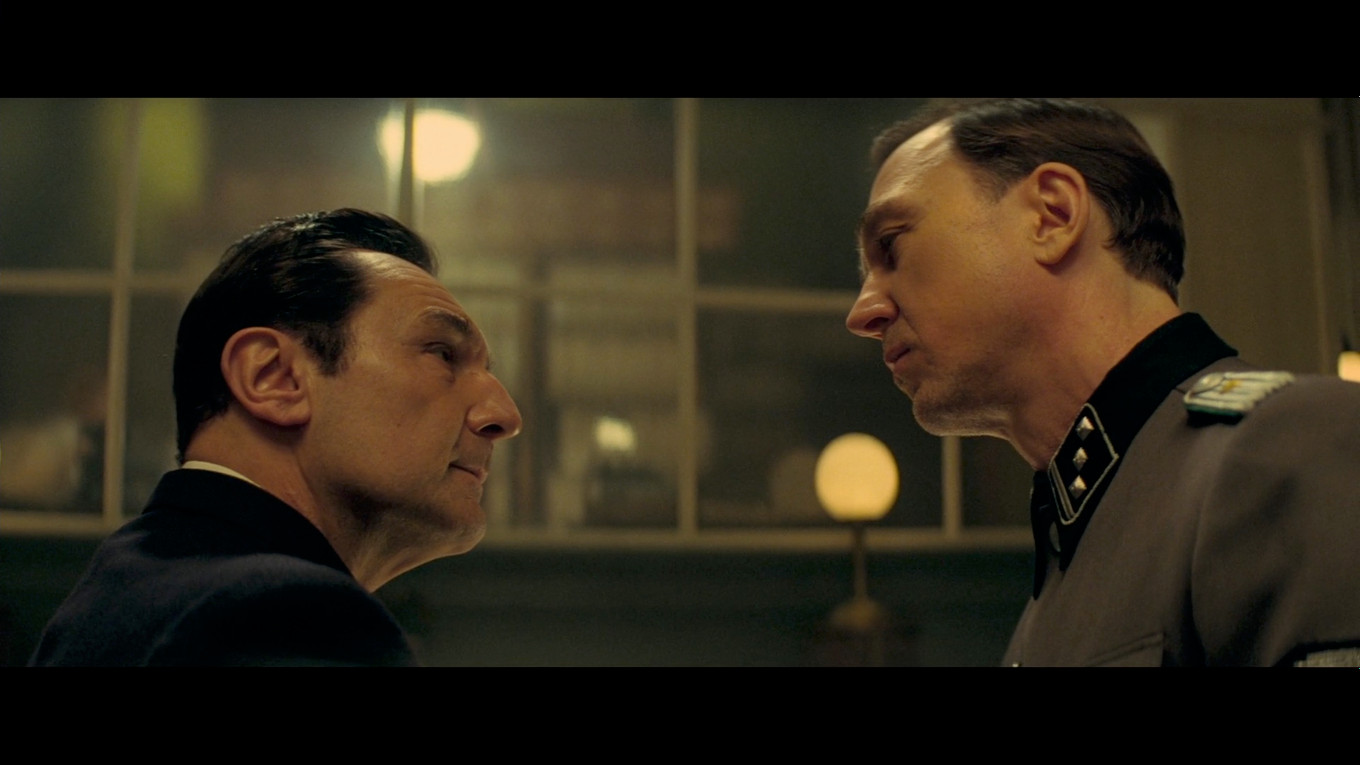
I wanted the viewer to be like one of Jean Moulin’s comrades and witness his ordeals and his sacrifices. The shoot had to be as simple as possible, as close to what was humanly possible to endure in 1943 at the hands of the Gestapo.
The film creates an interesting effect since at times we forget the war context and the deportation that looms…
We wanted to make a paranoid movie. Moulin is constantly being watched, he must be careful about every move he makes, weighing up every word he says. The bigger picture cannot always be found in the smaller story, but we wanted there to be scenes where the events would be significant. When militiamen deport these Jews, while waiting in an alleyway, we perceive the dire fate of this totalitarian regime that has taken the upper hand.
How did you find a balance in staging the heinous character Klaus Barbie, whom you didn’t want to humanize too much and who’s played here by Lars Eidinger?
It’s a question of measure. I wanted him to retain a kind of absolute surgical coldness. Unfortunately, he personifies a vision of humanity and civilization that is extremely powerful. And still, he’s a human being with his own world vision. I wanted to keep this particularity by drawing inspiration from what we knew of him. We know that he probably had a lot of conversations with Jean Moulin, that he played a game of cat and mouse with him, and that he deployed psychological tactics like some grisly detective. I also saw an opportunity to turn him into a type of director.
Like in that scene where he forces Jean Moulin and the Countess of Forez to dance…
He has an almost artistic vision for this gruesome project. However, I didn’t want him to be a circus character, or fall into the trap of the caricatural Nazi. I told Lars Eidinger that he had to be like Max Von Sydow in Bergman’s films, with that same discipline and impenetrable coldness.
And finally, how did you work on Jean Moulin’s character as portrayed by Gilles Lellouche?
I read a lot about Jean Moulin, in particular Daniel Cordier’s book “Alias Caracalla.” This enabled me to meet a virtual Jean Moulin who had a vision of civilization, art, and national community. He had a sense of humor, loved life, but he knew he had significant battles to wage in this totalitarian system that took a hold of Europe. There was a simplicity in this character that I wanted to convey and Gilles was perfectly receptive, focused on this internal frequency, which allowed him to find a kind of internal purity, without any exterior influences.